
Still TURNING IT OFF (mostly)
Screen Time Update #whatever

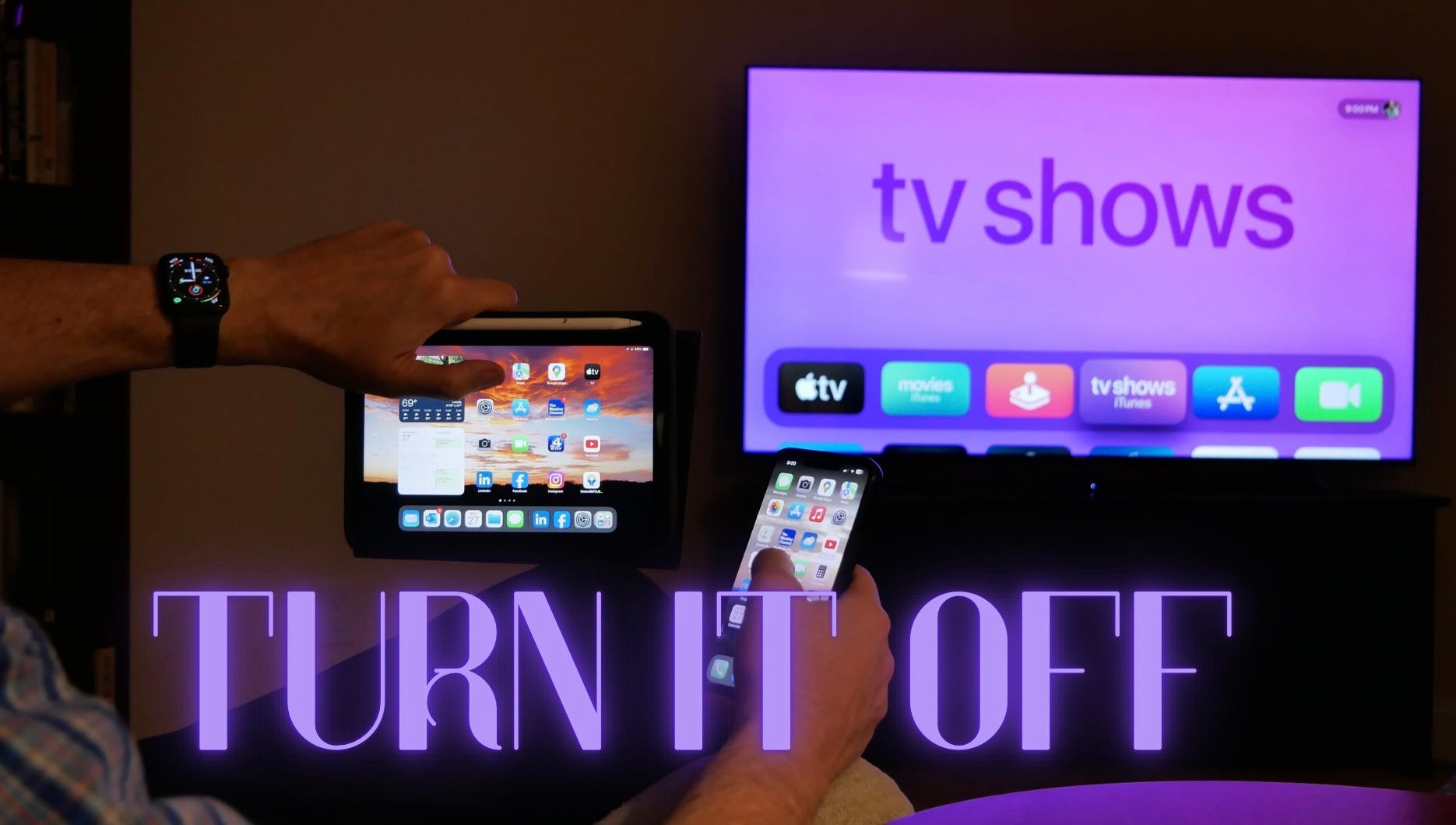
We’re back for a screen time update after a bit of a pause on this report at TURN IT OFF. No excuses here, but the day job took its bite in January/February with teaching, grading papers and a chapel address for students at North Greenville University that I hope you’ve had a chance to watch.
In any case, screen usage hasn’t looked “normal” for a while, so it’s been easier to let these updates languish.
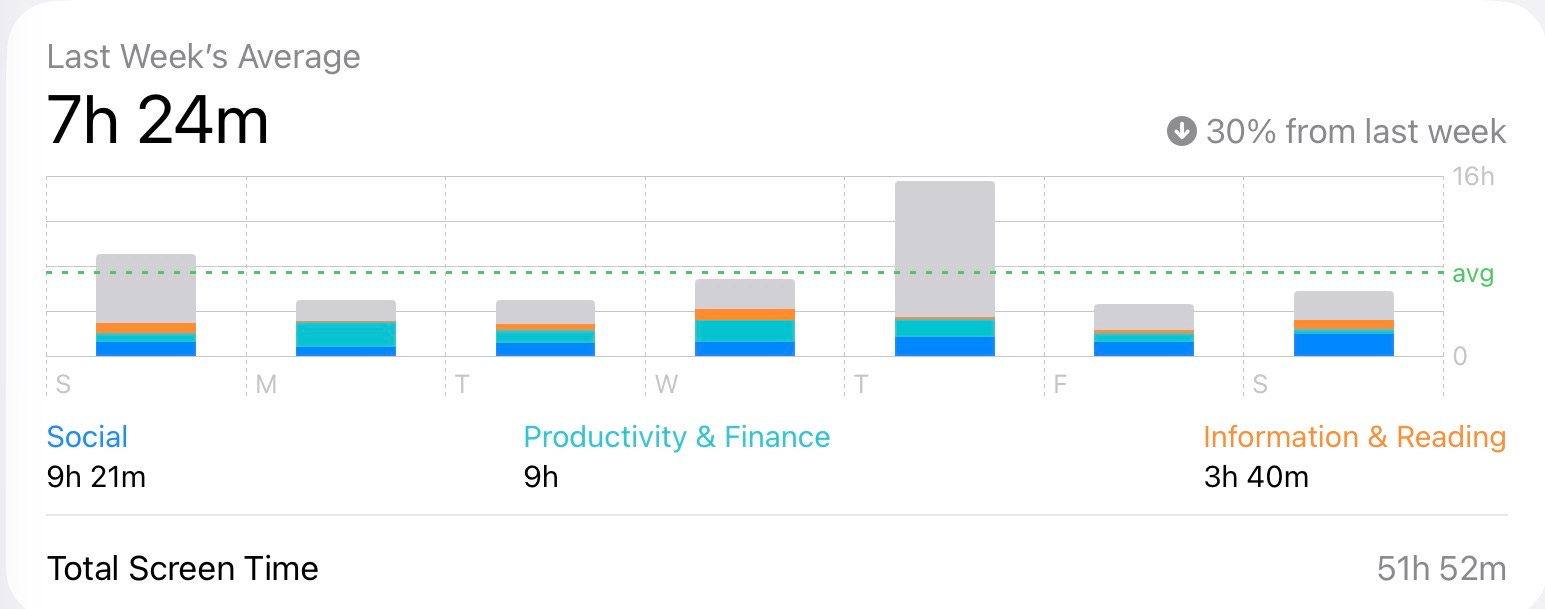
That said, last week seemed to stabilize on the screen scene, with total usage averaging back under 8 hours a day.
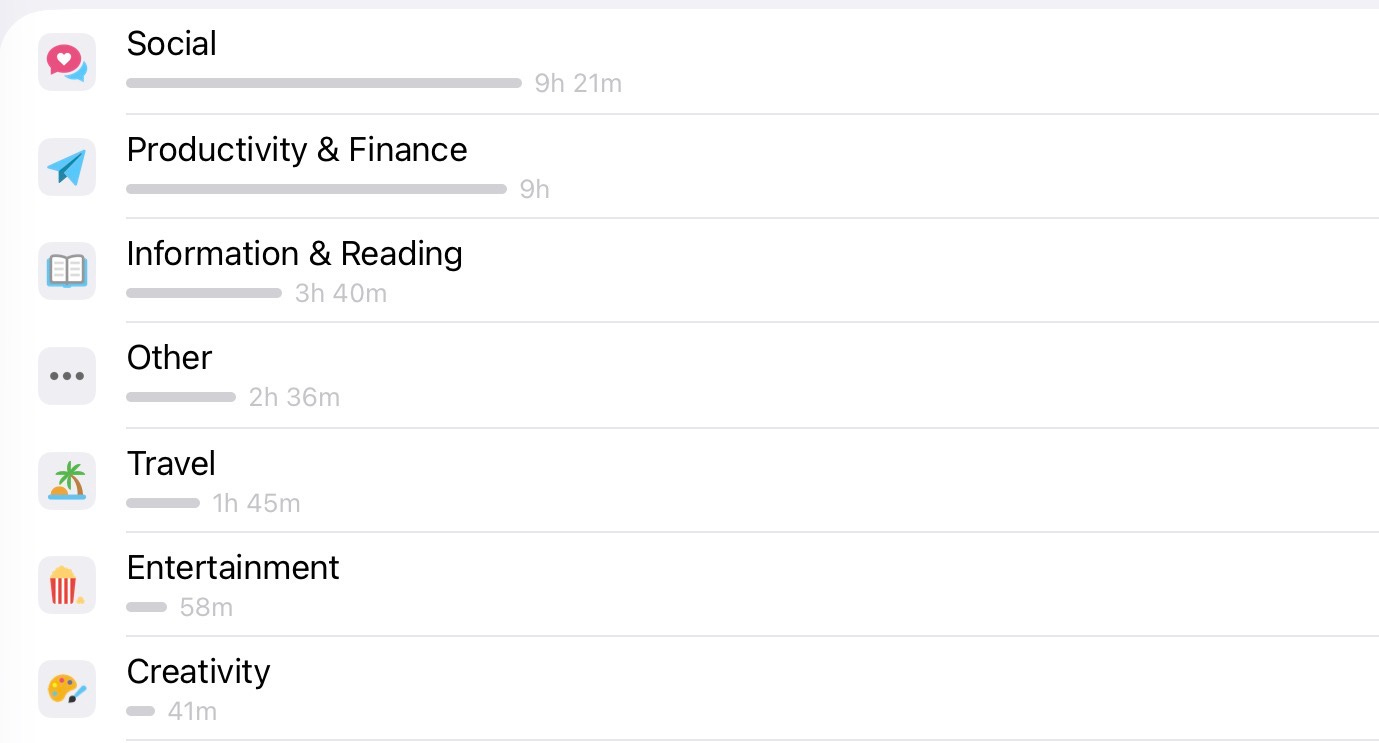
When you look at categories, the cumulative hours for the week make a little more sense. “Productivity” will take a bigger chunk when you’re writing - like for this Substack - or word processing the final details of a speech manuscript or even, occasionally, grading an exam or two.
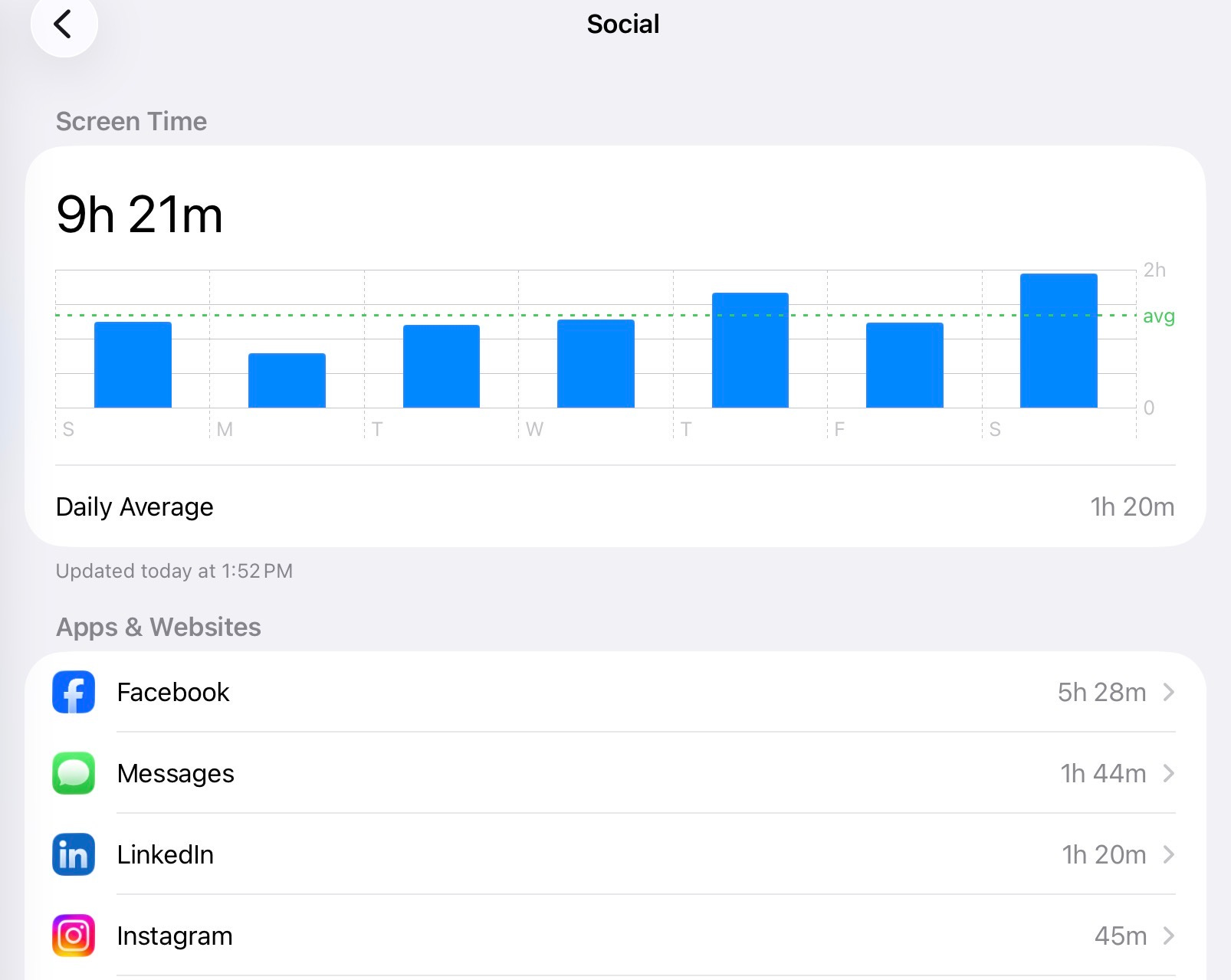
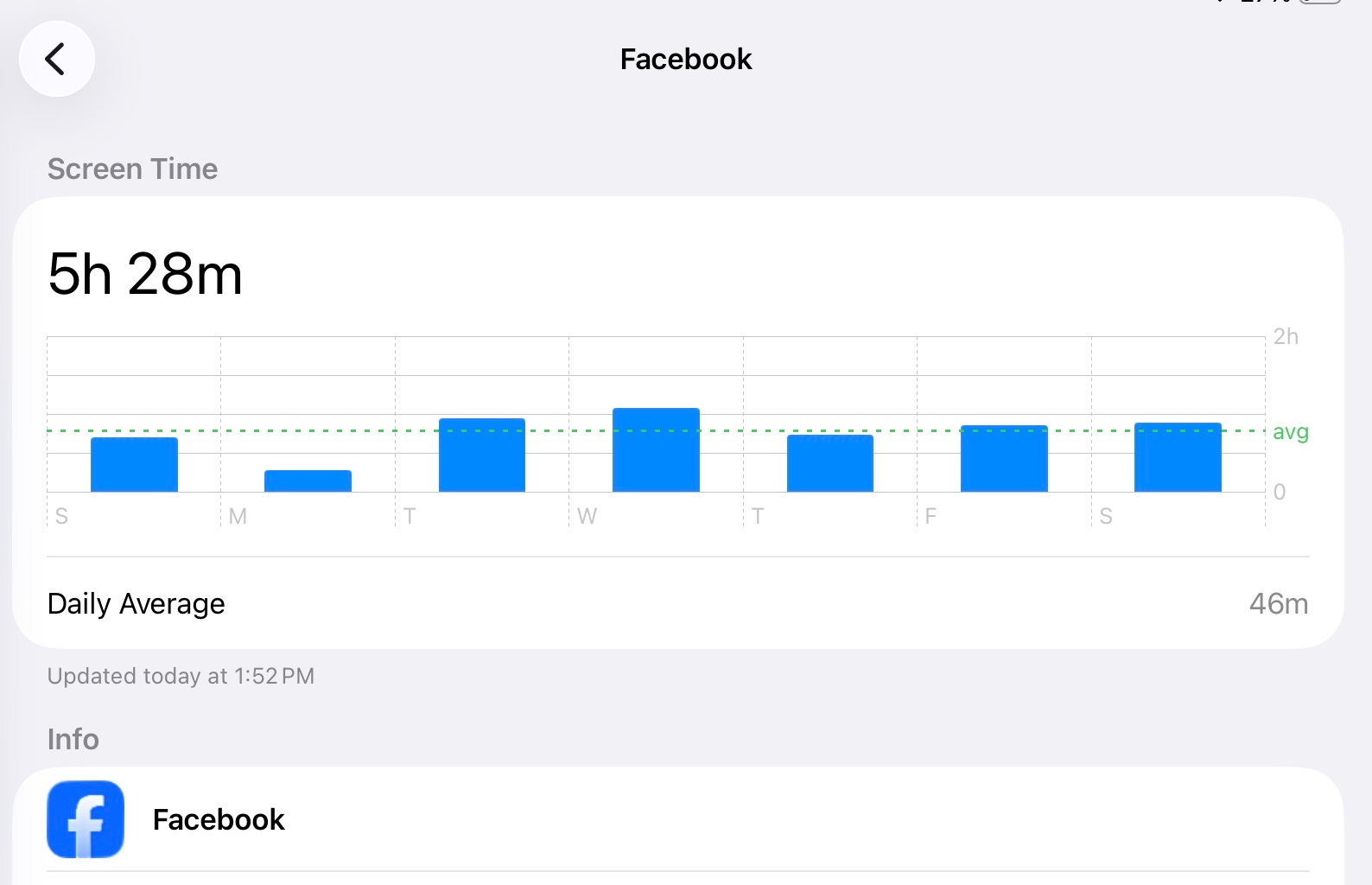
I’ve resolved to back down social media even more significantly in 2026 than the gains I made when starting this site. We haven’t quite achieved whatever that number should be, yet, and I could blame it on national events, Olympics or even social promotion of TURN IT OFF.
But these are explanations, not excuses. Minutes are minutes and those given to social take from something else in our lives. I am pleased, however, anytime the Facebook number goes under an hour per day and I will continue to focus on bringing that down further.
And in Media Industry News
We try to summarize and comment briefly on media literacy-type items in the news here that may not merit an article.
The problem with not updating weekly is you accumulate some stuff and turn this space into an old-school WEB-log (remember, blogs?) which, for this audience, might not be such a bad thing.
Colbert Conflates
If you haven’t heard, Stephen Colbert is not going quietly into the good May, when his CBS show ends.
In general, I am concerned about the intentions of the activist FCC Chair, Brendan Carr (yes, activism can come from the right, too) and its implications for the First Amendment and broadcasters.
That doesn’t mean I always go along with Colbert’s activism on what is - ostensibly - an entertainment program. But if entertainment now has to consider “equal time” in all matters, you can see where this might go. (to court - like everything else)
However, an incredibly well-written balancing piece appeared in National Review, pulling apart Colbert and CBS. Since I am teaching media law and ethics this very semester, I’m tuned in to the many ways all political “sides” seem to sidestep the actual law when it suits their purposes.
To paraphrase John Adams, “Laws are stubborn things.” And just remember, “censorship” takes many forms - including private business decisions, so when a network refuses to air something, for any reason, it’s not illegal according to the First Amendment. Only government has that restriction.
Faux News?
We’ve talked in this space a good bit about mainstream, national news media coverage (remember, we try to be precise and not broad brush “THE MEDIA” like it’s the big, bad wolf)
But this week, a fellow Stacker and also former journalist, Rob Vaughn posted a nuanced and, might I say, “fair and balanced” takedown of the Fox News Channel that I think is worth your time:

Like me, Rob leans conservative on most things, but as a journalist he’s seen Fox News elevate opinion shows that drive ratings and revenue and subsequently transformed the rest of the 24-hour cable news landscape. On the way, good reporting (actual journalism) gets laid on the roadside and hardcore viewers keep the channel on all day as the network keeps telling them what they want to hear.
I wrote something similar in 2018 for the Indianapolis Star, but Rob is saying it now with more contemporary context and evidence.
Withering Hollywood Heights
No, I’m not writing about the latest Bronte film turned bodice-ripper, but about the continual unraveling of what we metaphorically refer to as Hollywood.
First, a positive (ish) note. My wife and I saw I Can Only Imagine 2 in the theater, on a Friday opening night and the non-matinee showing. These are big economic steps for us. We usually prefer an empty-theater afternoon matinee at least a week past the opening rush. The fact that we both now qualify for senior discounts helps a little, but we still walk right past the concession stand.
As for the movie - good, not great, but honest storytelling of people living out their faith in the context of family, fame and genuine struggle. I love the maturity of Mercy Me’s music as the band members age and both “Imagine” films reflect lead-singer Bart Millard’s personal story in a way that shows the “faith-based” film industry is also growing up.
Joseph Holmes, a friend and writer who can also be a little tough on the “Christian” film industry wrote a defining review for Religion Unplugged (where I sometimes publish) that probably got me to the theater in-person rather than waiting for streaming.
I also knew the ending was coming for me with the song, “Even If,” which should be the title of the film but I understand movie marketing. Since this song came to me around 2019 at a time of professional and personal crisis, I was - predictably - wrecked by the words and performance, aided by all the theatrics of a well-crafted (if a little too convenient) in-concert finale’.
My point, though, is not so much to review a movie as to tell you about the context. On that Friday night showing, we were part of the 10% filling theater seats (at best). I know the “faith based” market is narrow, but I’ve seen other metrics that say we believers are attractive to Hollywood precisely because we still show up and buy tickets. And to my eyes, the rest of the 18-screen theater complex was pretty dead too.
Hollywood - the metaphor and the town - is in trouble. 2025 box office revenues are, by some accounts, worse than the studio press releases are saying. This opinion piece from The Hollywood Reporter gives an entertainment reporter’s perspective on the industry he’s watching fade away.
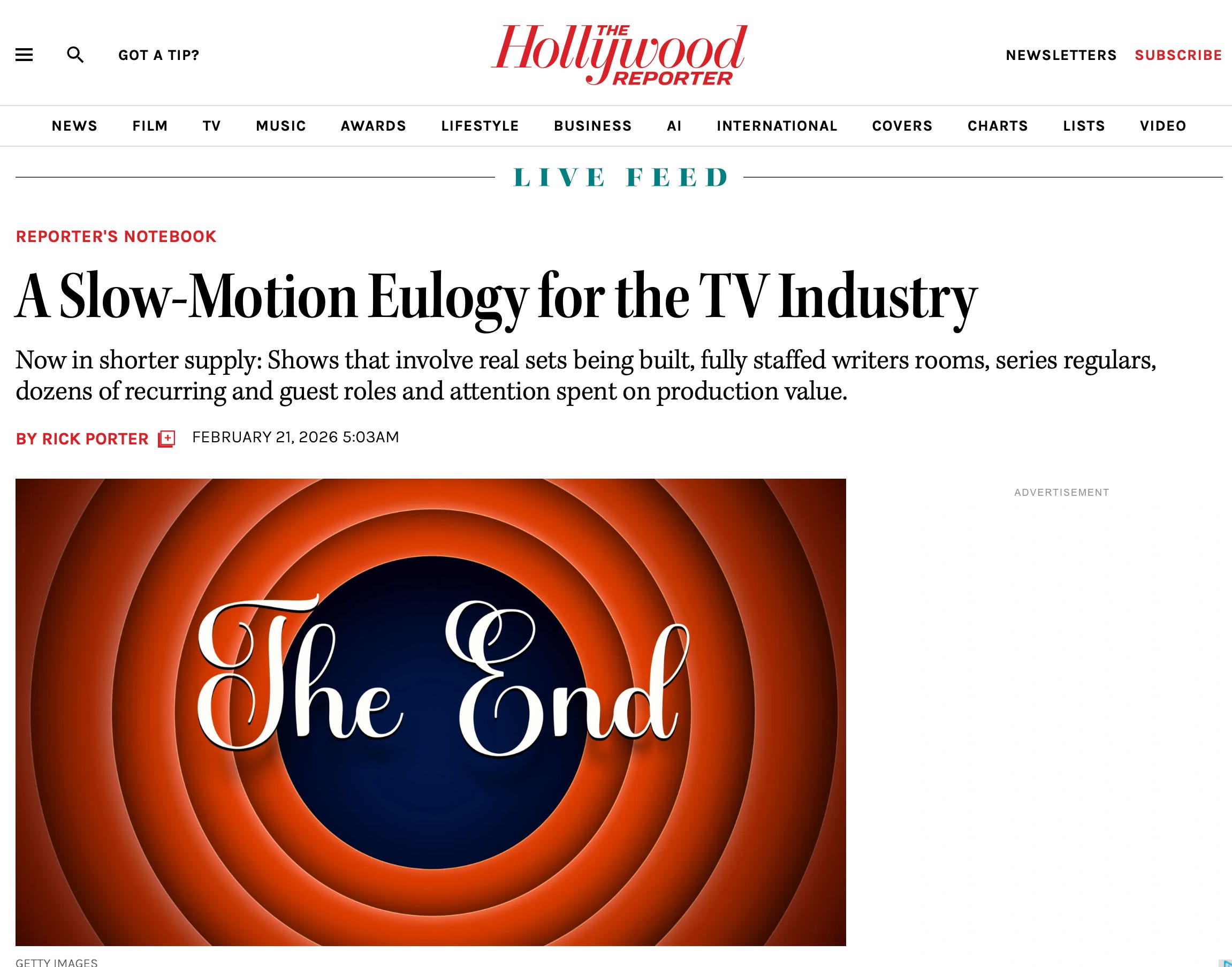
I’m not sure everything that means for us followers down here trying to TURN IT OFF, but it is especially sad if we are shifting our attention from mainstream entertainment we may argue about, to social clips and influencer-driven “content” that can neither tell a story nor require us to think while we feel.
A Closing Hope
I end with an insight that emerged as I prepared the message, “We Need to Talk.”
In Philippians 2:7, Paul tells us Jesus “emptied himself” when He came to earth.
“He made himself nothing by taking the very nature of a servant, being made in human likeness.” - Philippians 2:7 (NIV)
Until I began asking myself not just why Jesus died, but why He lived, I never really thought of the “Word becoming flesh” in terms of a human voice, face and eyes.
These are the communication tools the God of the universe chose to use to relate to us, when He certainly could have chosen all the great media invented across time.
So while we continue to grapple with how to TURN IT OFF and use our media responsibly, I am encouraged this week to practice exactly what I was privileged to preach - talk a little more, scroll a little less, show up in-person and CO-mmunicate for real.
God invented communication - indeed gave it to humans uniquely. We are the ones created in His image. And maybe, through Jesus’ emptying himself we can see what we gain in our human likeness through actual, not virtual, engagement.