
Take the Wide Shot
Bias is sometimes in the eye of the Camera

(note to subscribers: TURN IT OFF will not go long without commenting on the groundbreaking lawsuit against META and social media, but we are letting the dust settle on the details before adding our perspective. Check the headlines and look for more in our Monday screentime and media news summary)
Did you fly this week or did the T-S-A lines keep you grounded?
If the latter, how many airports reported hours-long waits most of the week?
Answer: ONE *
Houston Hobby, we have a problem.
Most everywhere else it’s - well - not complicated.
At week’s end, most major airports wait times clocked in around or under 30 minutes. In Charlotte we call that - Thursday.
(* notable exception - news reports said Atlanta was pretty bad, but the Atlanta-Hartsfield airport administration stopped reporting numbers on March 22.)
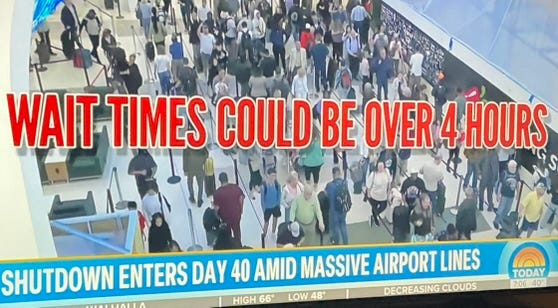
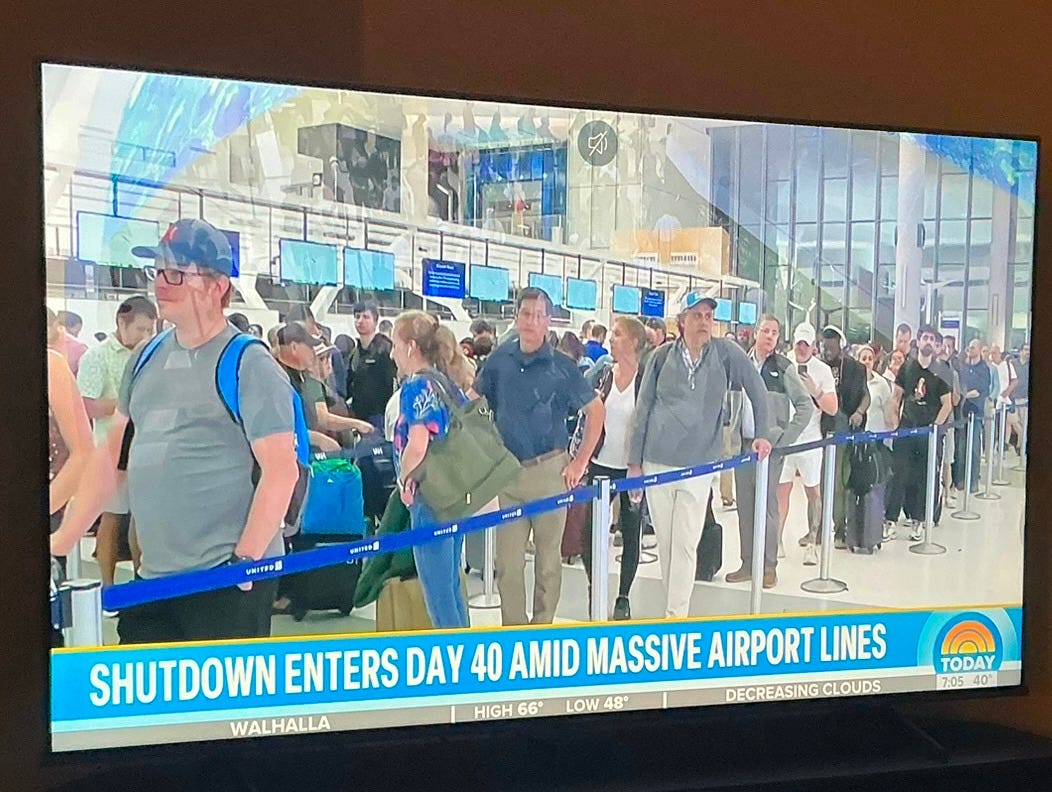
But you wouldn’t get much nuance if you tuned in to the TODAY show on NBC, as I did Wednesday morning - on mute.
Mid-week newscasts across multiple channels led with the airport mess despite an ongoing, actual, shooting, war.
Why?
Well, it’s here, it’s happenin’ and it’s really good video! good sound ! good LIVE !
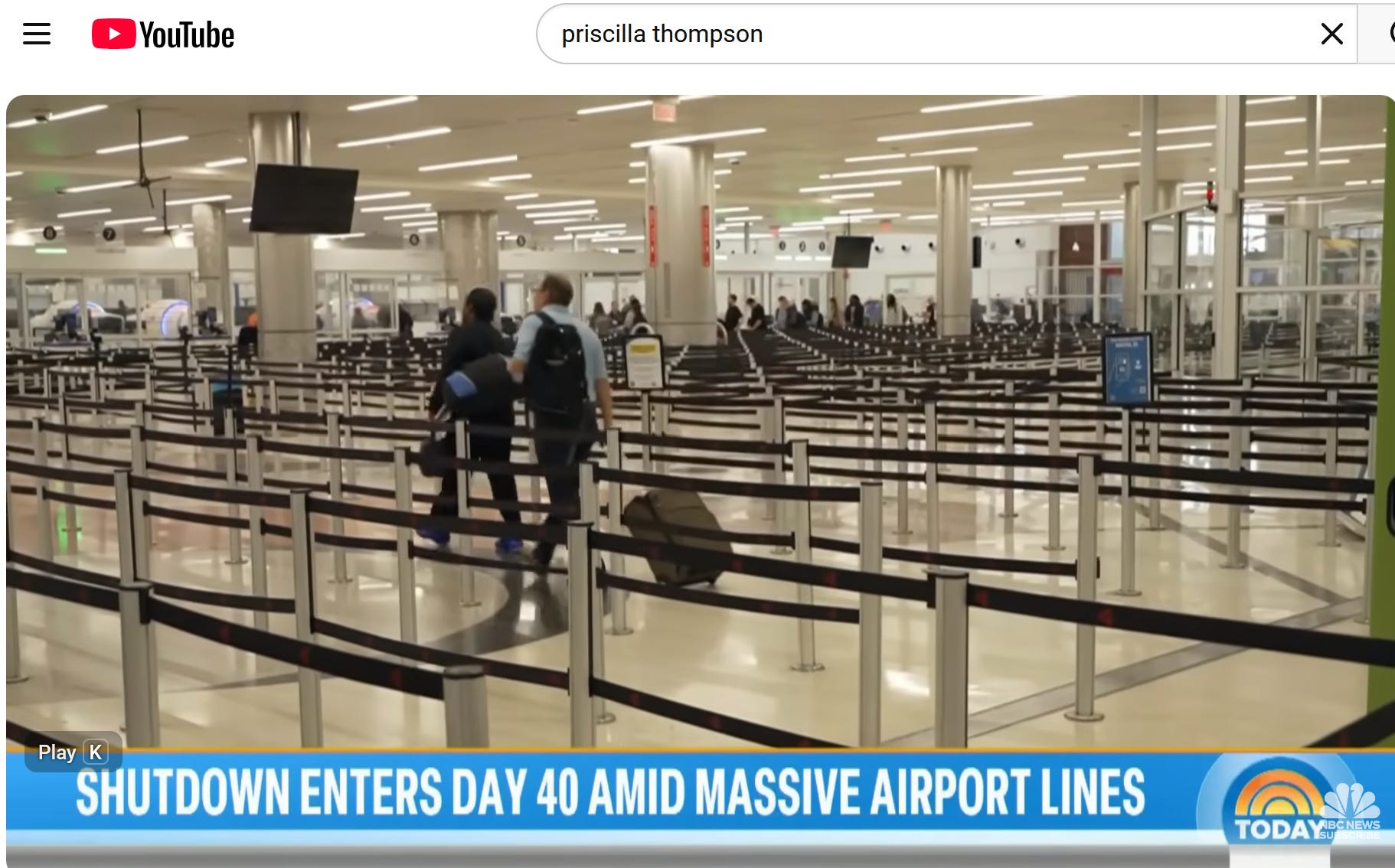
To be a little fair to the NBC reporter, when you get into the story she isolates most of the attention to Houston and a little about Atlanta and even notes later in the day the lines looked quite a bit different.
Even while this story was airing live, I found a news website from WMUR-TV that showed reasonable wait times at most of the 17 airports surveyed. There are many other sites now tracking the data.
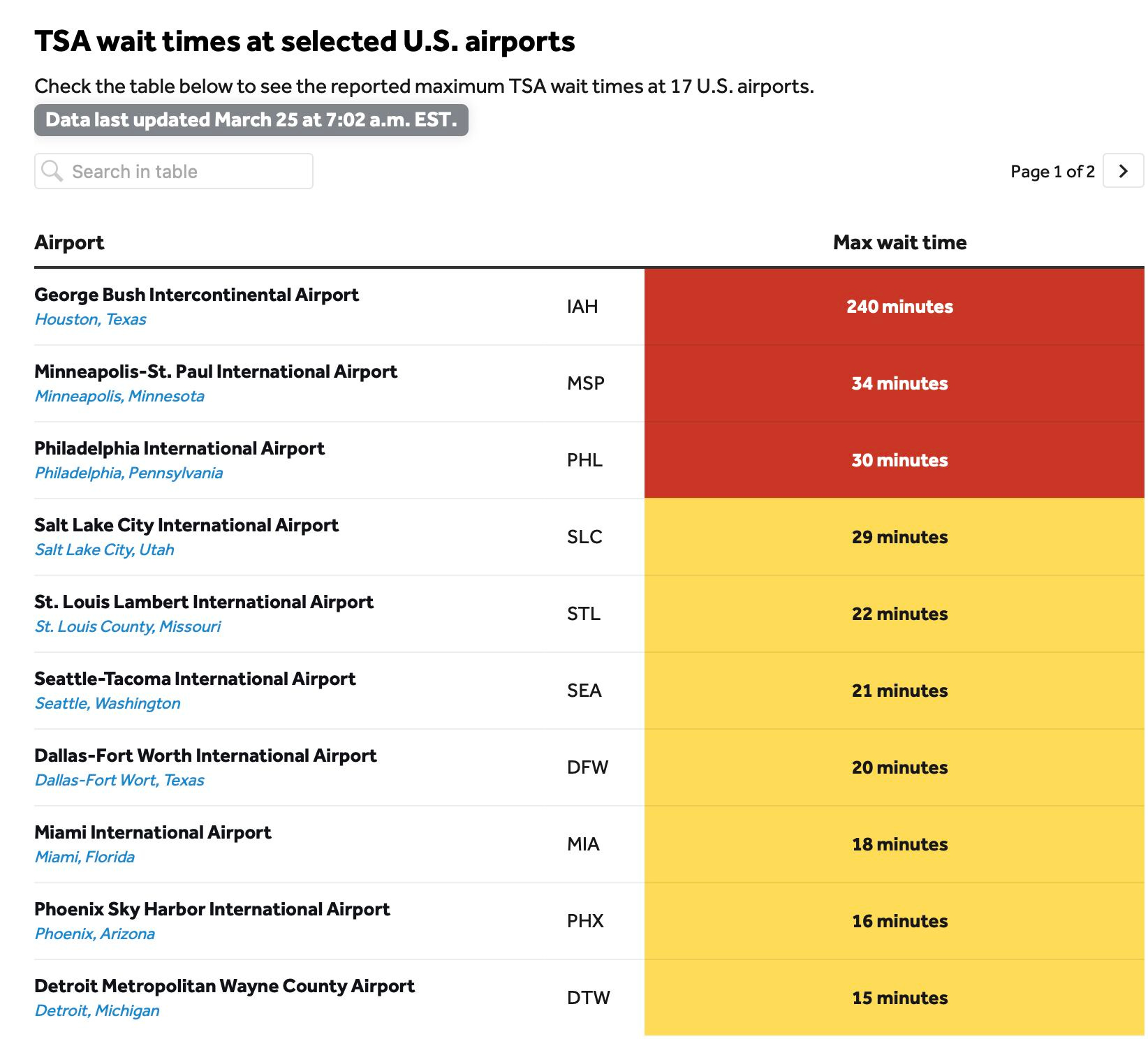
So while the headline is CHAOS…the story is actually - unpredictability.
It’s the difference between how you sell the story at the top - what we’ll call “getting them in the tent” - and what you present once you have their attention.
It’s so fashionable to bash bias and “fake news” these days that the terms have lost any meaning. Nothing about this story is fake, but it is hyped, decontextualized and contextually biased by the shape of news presentation.
Television news - which I know better than any other - has always struggled with hype. It’s a picture medium in a show business frame. You can’t air 90 seconds of talking heads in a news report (unless you’re cable) and the audience will switch channels or scroll on by at the slightest possibility of boredom.
I learned early in my career and have taught many students to “point your camera at the flood.” You don’t show up to a flood zone and take video of dry land.
BUT…if the flood is isolated, good media ethics says you should zoom the camera out and show the full context in a wide shot. This is actual and symbolic. Going wide means putting breaking news and good video in their proper perspectives.
If one or two airports has a problem, this is a one or two airport problem - not a national crisis. It’s not that the reporter or her producers intended to de-contextualize, but the structure of the news “show” necessitates focusing on the flood.
The audience, watching on mute or scrolling by phone misses most of the context buried in the text because they’ve only seen the chaos, the graphics and the headline.
Takeaway: The airports are a mess. All of them.
Thus, traditional journalism contributes to the generalization and meme-fication of the social-mediated world, rather than bringing the clarity and perspective it is uniquely positioned to offer.
One other effect is to confirm a communication theory from the 1980’s: The Cultivation Effect. (Gerbner, Signorielli, Morgan)
The theory posits heavy TV viewers tend to think the world is pretty much like what they see on the screen and they therefore perceive it to be a pretty violent, mean and nasty place.
It doesn’t take much intellectual leaping to apply this theory to social media and see the same effect - on steroids.
On a site called, TURN IT OFF, why do I still care what the news media do?
First - I want people to understand where bias usually comes from. From my perspective, it’s not liberal vs. conservative or Democrat vs. Republican. Bias - if the term has any meaning - comes from a variety of structural factors in professional news gathering and presentation including the need to sell, sell, sell it to a distracted public.
Second - A media literate public must understand, as never before, that it should diversify its news consumption. Multiple news outlets have multiple perspectives - because as a human enterprise, of course they do. They are not necessarily lying to you on such an important news event, but they will include and exclude different elements based on their audience focus, medium and the reporter on the ground. Read more (yes, TV guy is telling you to read) to know more.
Third - Media can do better. In fact, they must. I see TV news trying so hard to copy the influencers and memers that they sometimes seem to have forgotten what got them to their mainstream media position. I don’t need to see bouncing graphics and hype on NBC News. I need as much perspective, context and balance as you can squeeze into a 2 minute report. Stop selling me the story. Tell it and show it instead - thoroughly
We should always expect more and better context from our news media but also a broader search for perspective for ourselves - in everything.
I’m drawn to the King James language from 2 Timothy:
“Study to shew thyself approved unto God, a workman that needeth not to be ashamed, rightly dividing the word of truth.” - 2 Timothy 2:15
While Paul is speaking of the Word more than the words we read, the principle remains. A Christ-follower should not be unwise, simplistic or hype in anything about this world.
Rather - circumspect, contextual, balanced and grounded in truth and seeking the same in our sense-making.
We should expect it from our media.
We must engage it within ourselves.