
Wicked...(not always) for Good.
Sappy can be Subversive

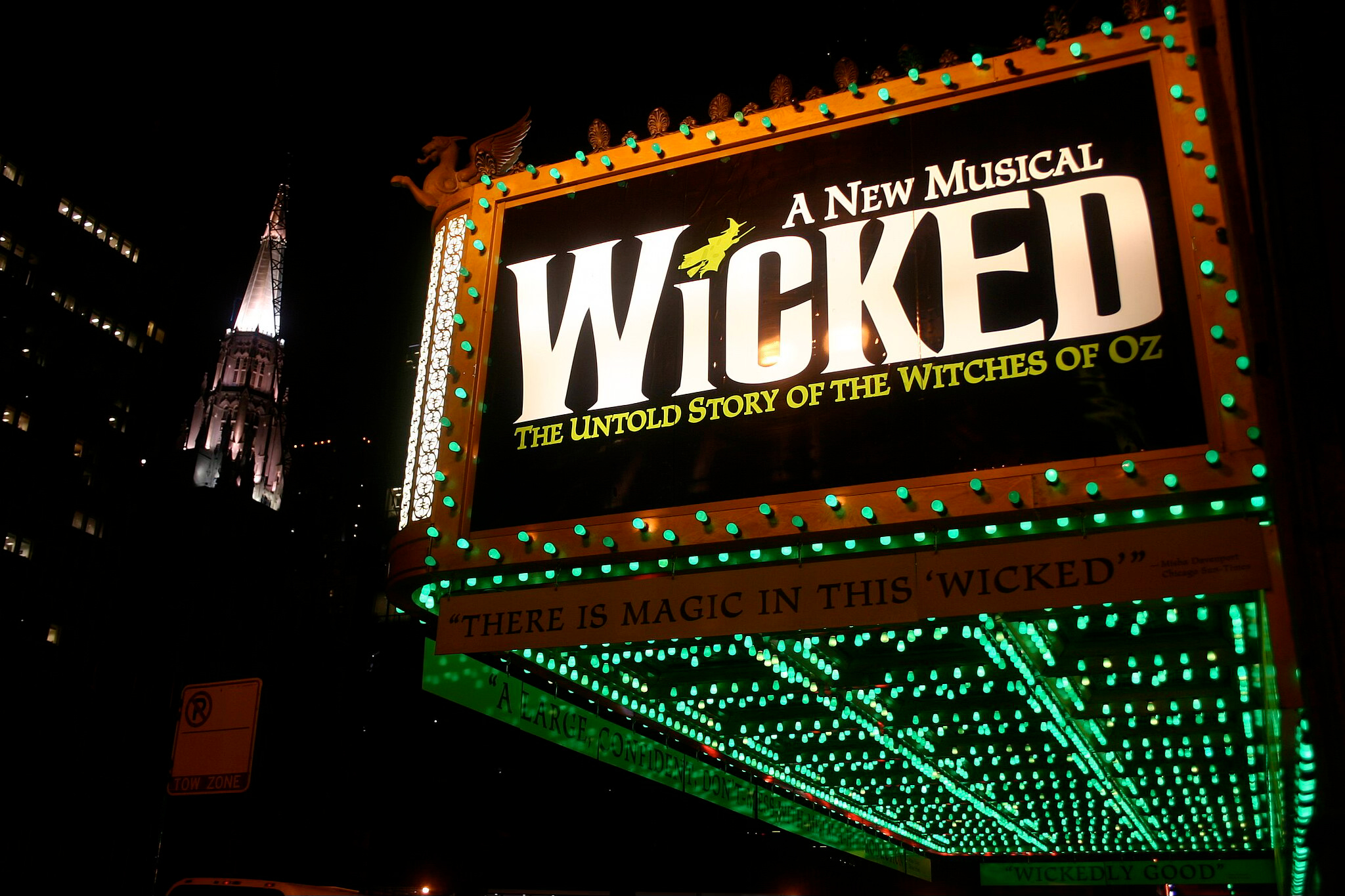
I was bound to write this.
Once the studio decided to make Wicked a 2-part movie and I launched TURN IT OFF this fall, I was off to see the Wizard.
Are the good guys really good or the bad ones just misunderstood?
This is the heart of WICKED - book, stage, and screen - and it’s right there in the title. You see it and think “she’s a witch,” there’s no place like home, “Lions, Tigers and Bears, oh my,” and everything else Ozzian. Then you wonder - can it tell us anything new?
Well, apparently, yes. While we were sneering the witch, laughing with the little people and fearing the flying monkeys, turns out they were fighting the good fight for social justice.
So, The Wizard of WOKE?
Or maybe if I only had a brain I would let it go and ease on down the road.
Full disclosure before we take our first yellow-brick step: I haven’t seen the film, Part 1 or the commercially-necessary: Wicked: 2.0 : For Gold. (I mean, for Good)
I did see a Broadway production in Chicago over a decade ago and enjoyed the ride, yet something about it stuck in my head and still bugs me to this day.
Wicked - in case you missed the mania - is the brainchild of author Gregory Maguire in a series of books that joins the revisionist, anti-hero literature of the late 20th century - turning what you thought you knew around on its ruby heels to tell us the rest of the story.
Once Wicked was a hit on stage, the creator made his intentions clear:
“I use children’s stories as kind of a snare and temptation and illusion to draw in readers.” - Maguire, CNN interview, 2008
And what does he catch in that snare? Sin, politics, racism, lots of adult sexuality (apparently - I haven’t read the books either) and commentary on the nature of evil:
“If everyone was always calling you a bad name, how much of that would you internalize? How much of that would you say, all right, go ahead, I’ll be everything that you call me because I have no capacity to change your minds anyway so why bother. By whose standards should I live?” - Maguire, CNN interview, 200
“By whose standards…?” Indeed, that is the question.
But how much moral complexity is necessary in a film marketed to children and teenagers?
Of course, the stage show and film watered down much of the ambiguity or wrapped it in song and dance. There’s a grand tradition in musicals to raise questions in the dialogue then sweep them away with the cleansing waters of a showstopper
No time for contemplation - Elphaba deserves a chance to FLY !
My concern is mostly in the portrayal of these ambiguities and how we respond to them when wrapped so casually in a sappy serenade.
On stage and film, Wicked presents a grayer world than Dorothy’s Oz, where (spoilers) Elphaba - the green one, you know, from the west - was misunderstood from the beginning because of her color and other…uh…baggage - get it?
The story goes on to almost let her off the hook for every bad thing she does. Villains aren’t villains, you see. We just need to get to know them.
Galinda (with a “ga”) is good, because, you know, she’s pretty. She is also Elphaba’s school friend, until she’s not. As an adult, she picks a side and it’s with the Wizard who is making Oz great again.
The Wizard is the establishment. The Wizard is power. And the Wizard is ultimately the real villain because he makes enemies of the others - flying animals, munchkins, and brightly colored people. Be afraid.
When I saw it on stage, I wanted Wicked to not be another tired statement on liberalism vs. conservatism. One side thinks people are basically good but society messes them up. The other tends to think people are basically not good but the state should restrain their worst instincts - then get out of the way.
I can see strengths and weaknesses to both arguments, but Hollywood and Broadway don’t always choose nuance between left and right.
I wasn’t helped in avoiding politics when the collaborators Stephen Schwartz (music) and Winnie Holzman (book) said the Wizard was inspired by George W. Bush:
“When Winnie and I actually began writing it, Clinton was president, and there were aspects and lines of the Wizard that sort of referred to Clinton. And then by the time the show opened, Bush was president, and some of the lines then were allusions to him.” - Stephen Schwartz, LA Times.
There were plenty of other dots audiences connected post 9/11 - like the otherized animals as metaphors for Muslim-Americans after the attacks. But let the record show the Bush administration did not demonize Muslims and, in fact, sometimes bent over backwards the other way.
People remember things the way they want to remember things and while there were troubles after those horrific events with some individuals taking their prejudices into their own hands, my recollection is most people were just fine making distinctions between the Muslims terrorists who killed over 3000 Americans and the tens of millions of non-terrorist Muslims who did not.
But let’s not let facts get in the way, we have a story to tell. I’m sure more than a few theatergoers and cultural critics are connecting similar dots to the current presidential administration - not without warrant.
Storytellers may beg off, saying these themes repeat themselves across human history, but we can tell when they are pointing the finger a little too sharply.
To be clear - I have no problem with story shadings of gray. My beliefs include the maxim:
“for all have sinned and fall short of the glory of God.” - Romans 3:23
I know most movies and television shows today live in the gray, but in this counter-myth, Wicked tries too hard to say there is really no wickedness at all except in those who despise others.
Wicked also takes shots at things in society that deserve it - privilege, power, popularity, group think and mob thuggery, but in doing so it nearly elevates the oppressed to martyrdom.
George Lucas tried a similar hat trick with his Star Wars prequels, telling us Darth Vader is not really dark, but a little boy ripped from his mother too soon by the establishment (Jedi Order) and still trying to get back to the love and peace he once knew. We will just look the other way at the thousands he killed as a Sith because “there”s still good in him,” and in the end he does the right thing.
Moral complexity can co-habitate with clearly defined heroes and villains. Observe another post-9/11 narrative - Christopher Nolan’s The Dark Knight - which asks complex questions about the limits of surveillance, vigilantism and mob rule in the face of unrelenting evil.
Nolan’s heroes aren’t perfect. After all, who embodies dark, light and gray more vividly than The Batman? But Nolan’s Joker is never explained, never understood, never sympathized because, as Alfred tells Bruce Wayne, “some men just want to watch the world burn.”
My argument with Wicked, then, is not anti-Broadway, or anti-Hollywood. It’s anti-ambiguity wrapped in sweetness and light.
Writers will tell their stories from their world-views, and even in a dark world they usually see evil in systems more than people.
My concern is more for the young viewers who aren’t developmentally ready to deal with moral complexity or for the rest of us who could think it through, but don’t - because the music is great, the dancing is fun and the stars are beautiful.
As a Christ-follower I have another template to apply to these narratives - God’s word and Christian doctrine. What does it tell me about every human story?
sin is real
we are all sinners
redemption comes only through Christ
we defeat evil through Christ with spiritual warfare, in ourselves and beyond.
I don’t expect to see those ideas anywhere in a popular narrative short of Narnia or Middle-Earth, but I would like to see some better dividing lines between good and evil when the battle is joined on stage and screen.
Wicked is a fine piece of entertainment, but it sneaks in some troubling ideas. Watch for them. Even while we enjoy the moment, we should never stop thinking - prayerfully - about what it all means.
Popular narratives in film, TV are the cultural and moral storytellers of our age. They carry and teach our values. We who see things - in part - through another prism should never surrender our spiritual sensitivities to the popular passions of the moment:
“For our struggle is not against flesh and blood, but against the rulers, against the authorities, against the powers of this dark world and against the spiritual forces of evil in the heavenly realms. Therefore put on the full armor of God, so that when the day of evil comes, you may be able to stand your ground, and after you have done everything, to stand.” - Ephesians 6:12-13
Enjoy the show, but also turn your brain and heart and soul ON. That is the mark of a media literate follower watching the world through a screen.
Because we know HIM, we have been changed…for good.